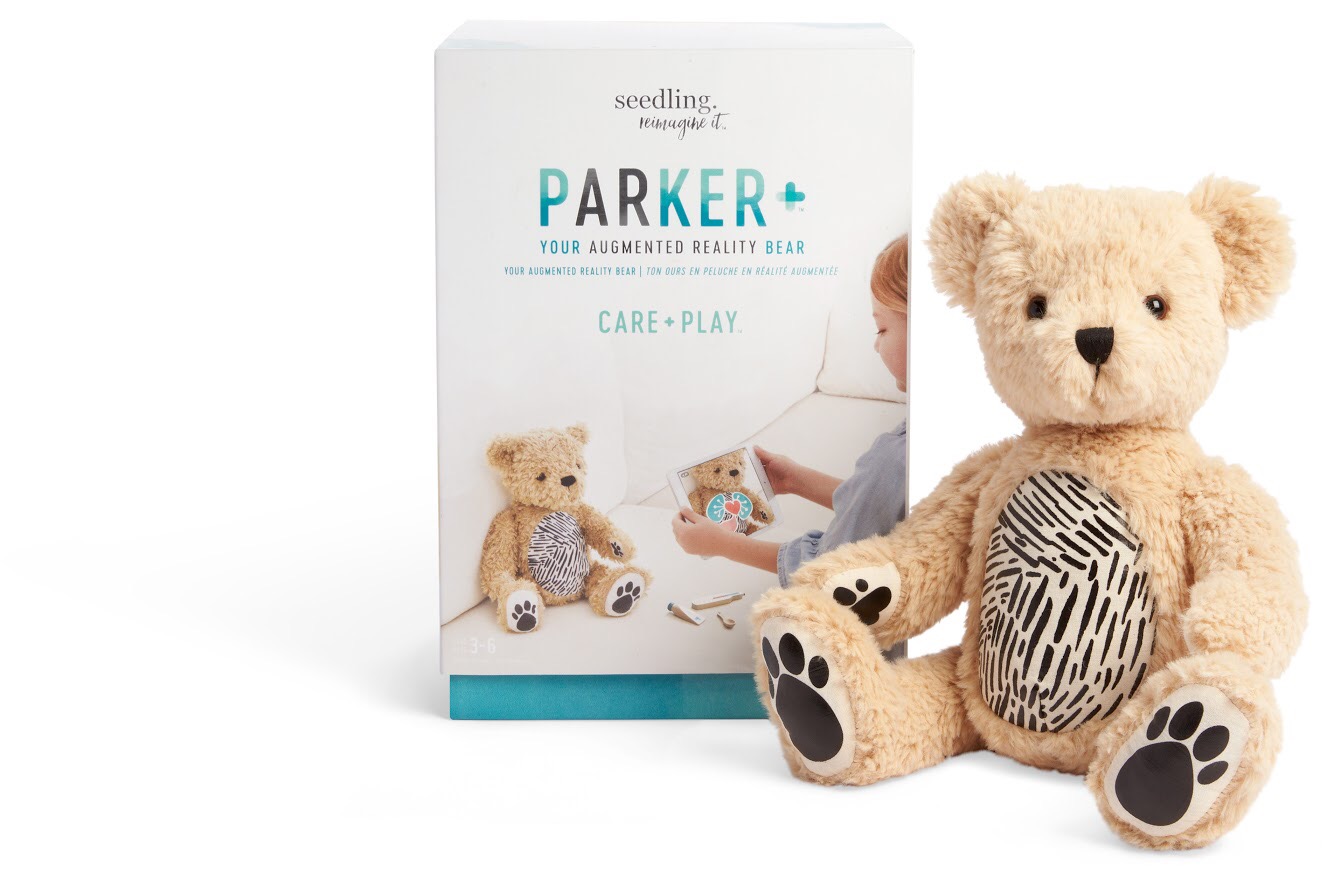
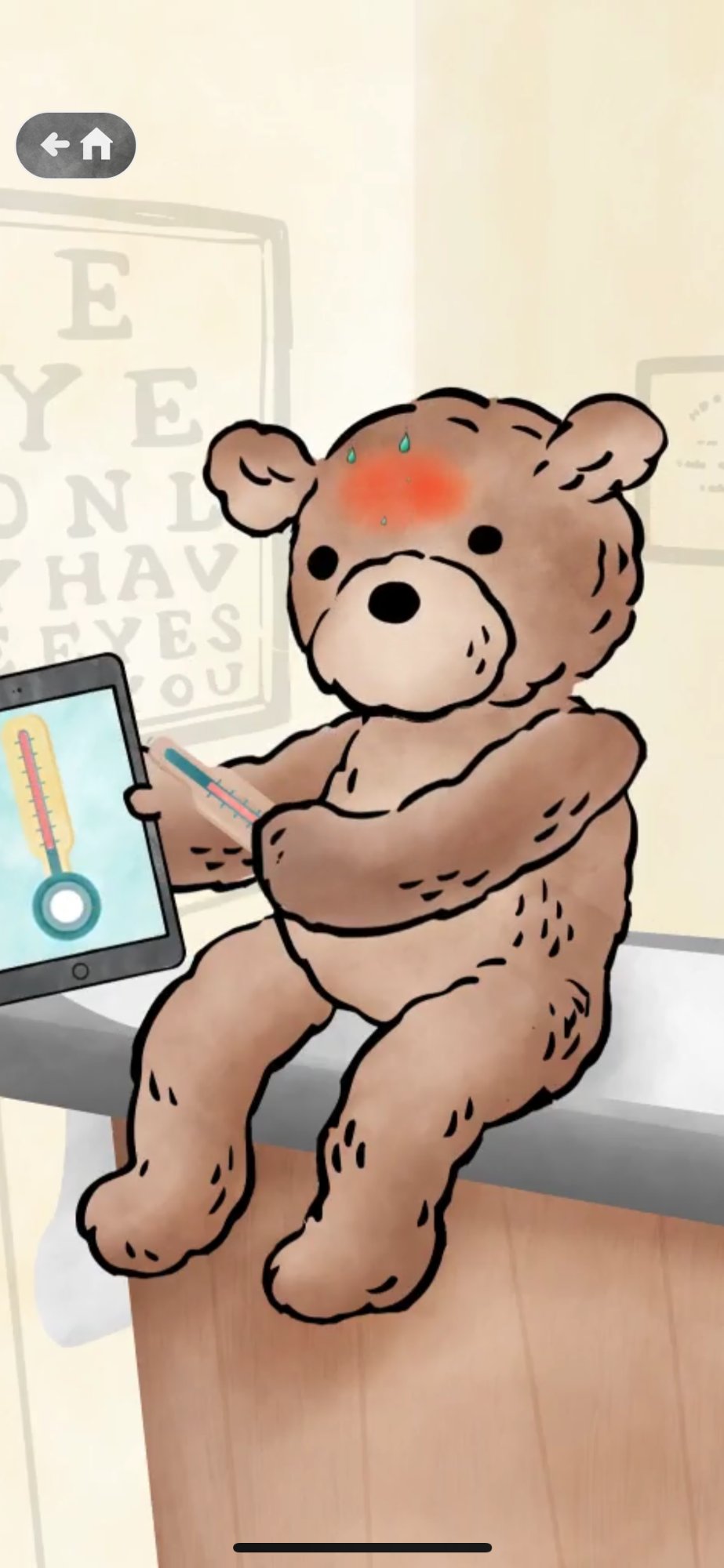
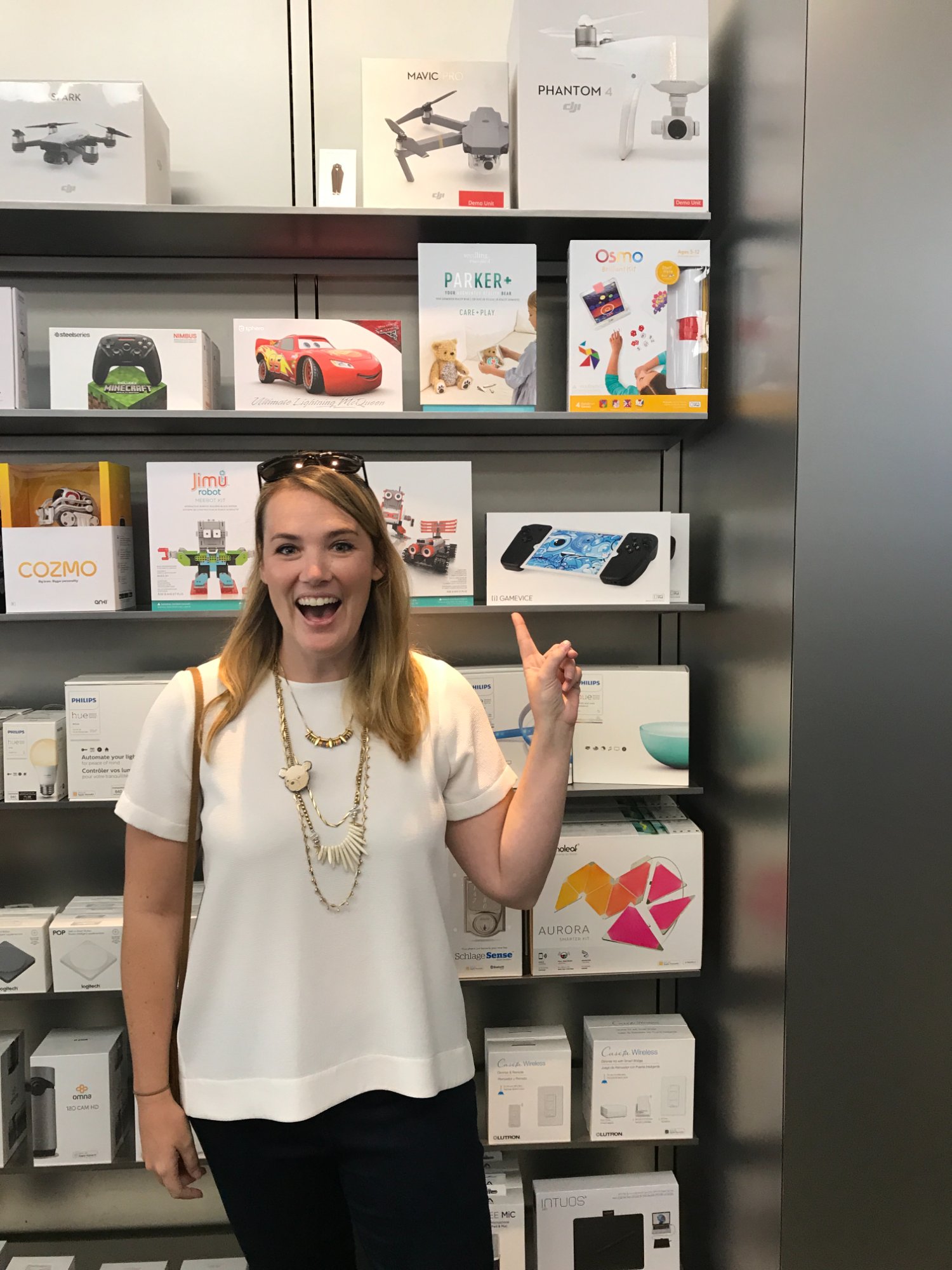
At the heart of every great game is good storytelling. This is also true for how kids play and learn. We created Parker as a doctor role-play game for young kids. Parker is a teddy bear with zero technology inside: no batteries, no Bluetooth, and no WiFi. But when you open the Parker mobile game, your real-life teddy bear becomes a game in augmented reality. Parker is sick, can you make him feel better? Help him with allergies, give him an x-ray, take his temperature, and play with Parker when he feels all better. As CPO at Seedling, I took Parker from concept to worldwide retail launch in Apple Stores in under a year, across multiple languages. When I pitched the working prototype to Apple's retail team, they greenlit it for a global launch. Parker generated over $2M in sales and 60,000+ app downloads.
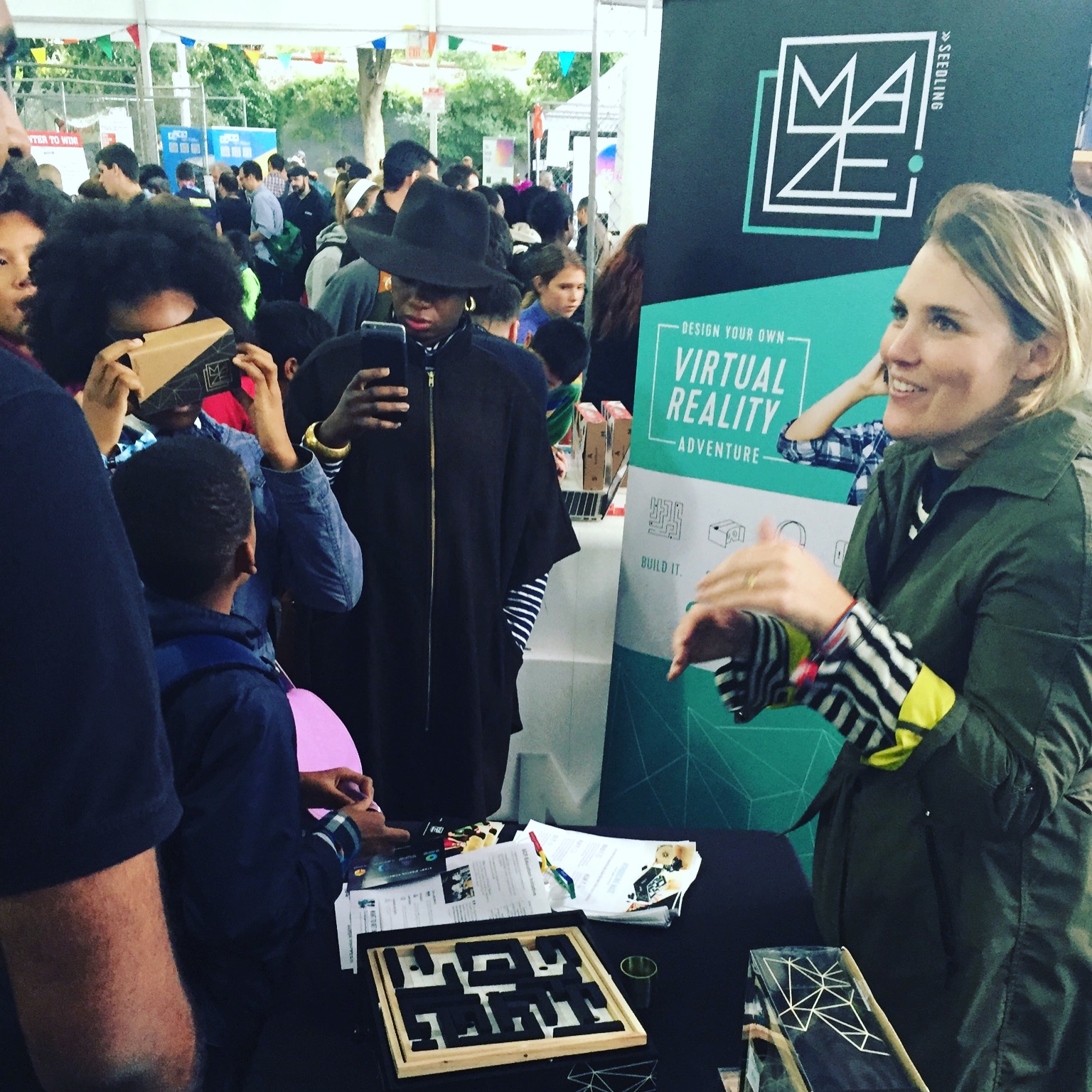
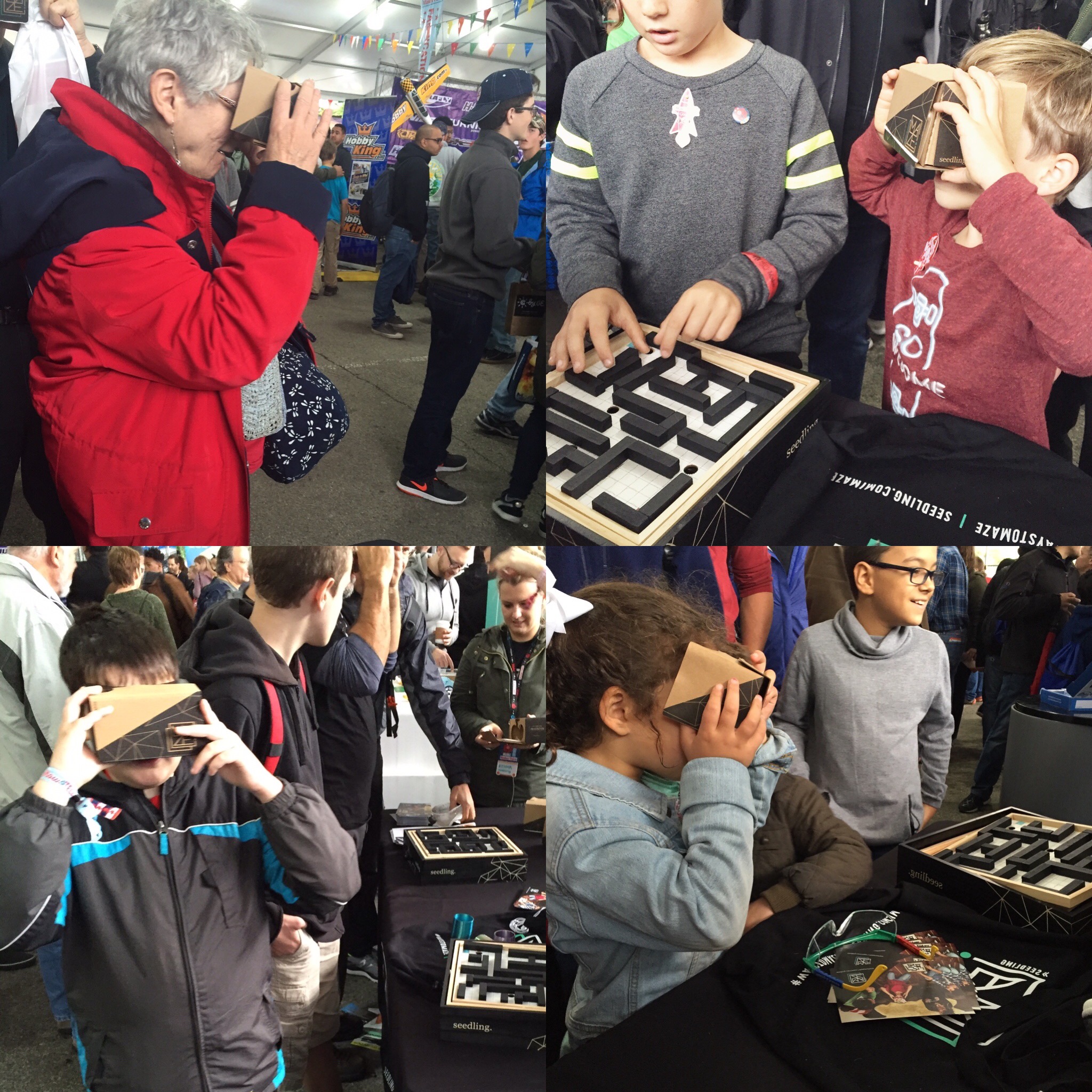
Maze is an interactive game where a child builds a physical maze in real life, then uses their mobile phone to load their maze into a mobile app and play it in virtual reality. Maze has rich game mechanics and allows the child to step into the role of game designer. Stepping into classrooms in Los Angeles, we play-tested early prototypes and worked with kids to refine the game. Maze sold at retail, was featured on the Today Show, and grossed over $1M in sales.
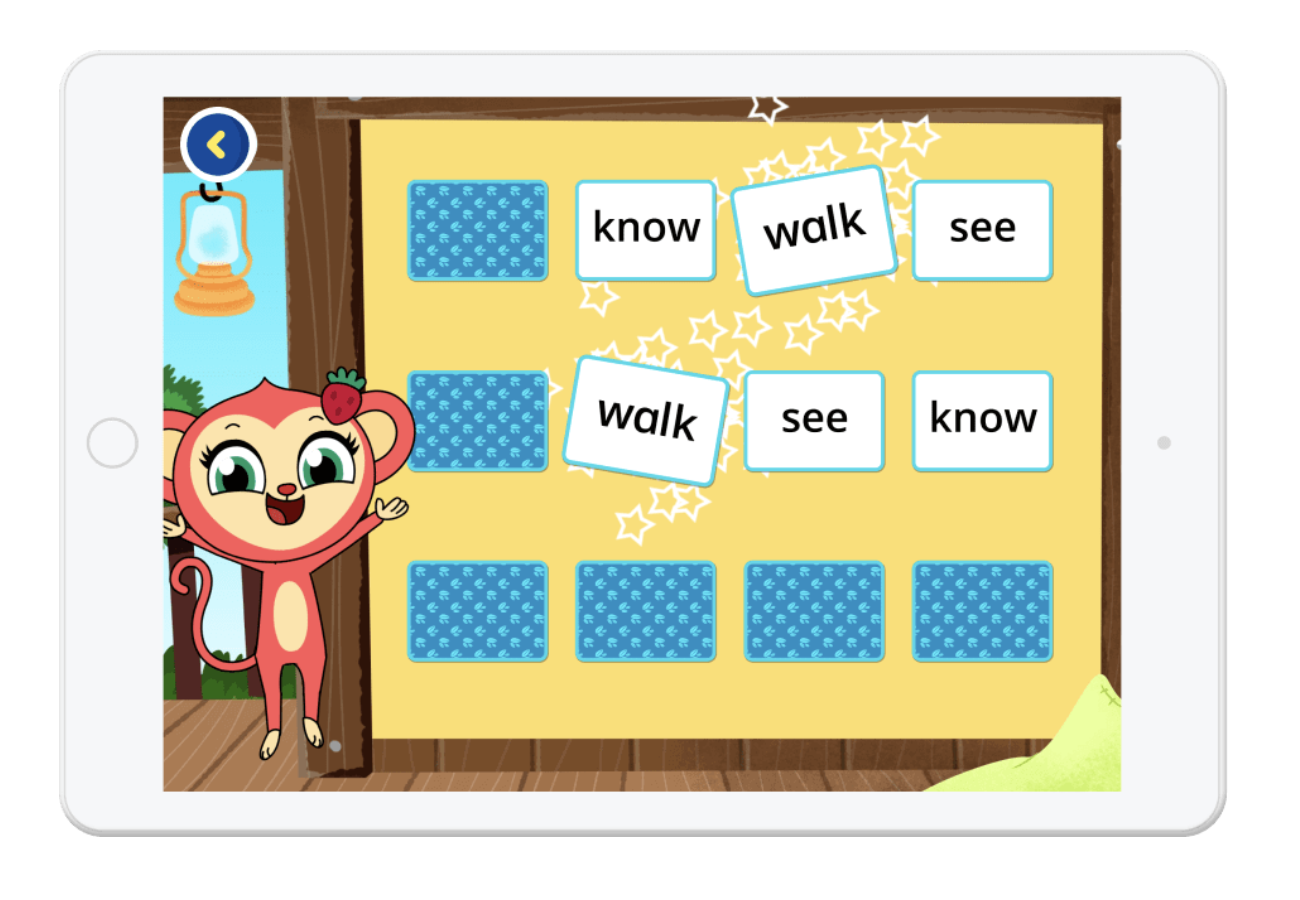
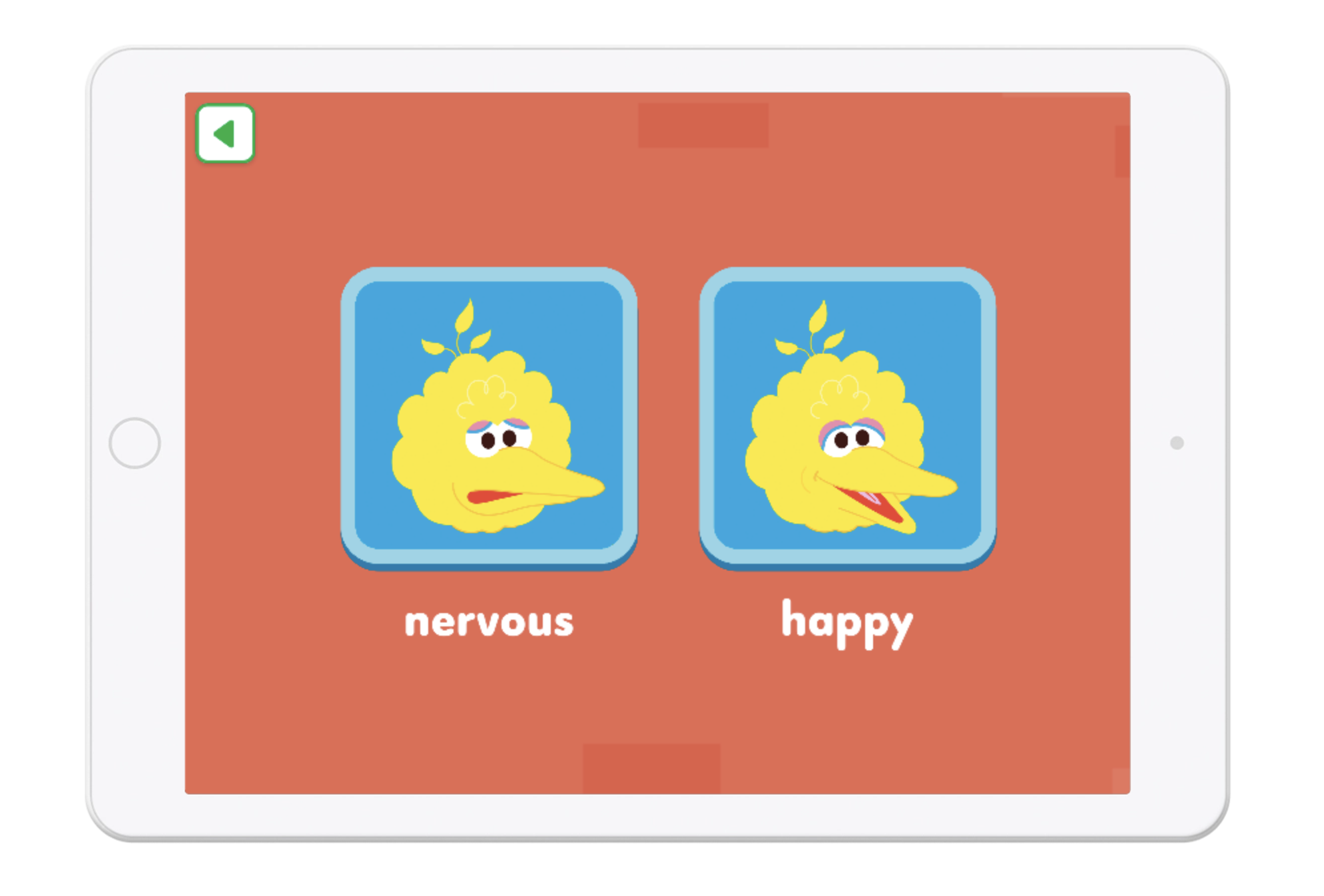
As CPO, I led the team evolving Homer, a learn-to-read app for children ages 2-8. My focus was on gamifying the experience, creating levels, improving visual consistency, and introducing new interactions that kept kids engaged. During COVID, Homer experienced massive user growth, and I built the product strategy to convert that growth into long-term retention. I also partnered with the Chief Learning Officer to ensure every product decision was grounded in learning outcomes. Alongside Homer, I led the development of a social-emotional learning app in partnership with Sesame Workshop.
The best products start with a deep understanding of who you're building for and what outcome matters most. Technology — whether it's AR, VR, or AI — should be in service to that outcome, never the other way around. When we built an augmented reality teddy bear for young kids, the breakthrough wasn't the tech. It was watching 5-year-olds immersed in playing doctor because AR allowed them to take an X-ray of their teddy bear. When creating games to help kids learn to read, we layered in voice recognition to help kids hear themselves (for fun!) and also so we could help coach them. The question is always: does this make the experience better for the person using it?
I thrive in the space between big idea and shipped product. When COVID hit and parents suddenly needed more support at home, I built and launched a standalone web app with dozens of hands-on, simple activities for independent play. An augmented reality teddy bear with a companion gaming app went from concept to a worldwide retail launch in Apple Stores in under a year. I create the systems that make this possible, outlining the plans that keep a team focused on what's essential for launch, with weekly recalibration on what can ship and what can wait.
Every team member needs to understand the big picture and their specific role in delivering it. For example, I've created coaching frameworks like a product manager evaluation rubric across six pillars of product management that gives people a clear view of their progression and where to focus their growth. I empower my team with a shared vision, then use our collective brainpower to experiment and build a clear plan. This makes it easy to row in the same direction.
I've been the person in the room presenting the prototype, the demo, and the vision, to Apple's retail team, to Target's buyers, to Best Buy's innovation incubator, to Sesame Workshop, and to board rooms and investors. I took a working AR teddy bear prototype to Apple, and their team greenlit us for a worldwide retail launch. I've developed partnership materials and concept documentation for collaborations with organizations like Sesame Workshop. I know how to create the narrative, the materials, and the demos that make people believe in what you're building, because I believe in it too.
Inspired by the Lucas Learning mission and the job description, I wanted to share a few concepts that immediately came to mind. I strongly believe in ideating with key partners, but I wanted to share these as thought starters.
What would it look like if AI could empower teachers? One of the challenges with widely implementing project-based learning is how non-standardized it can become, making it a challenge to get projects back on track, help a group that gets stuck, or identify emerging moments for learning. Using AI, we could help teachers see what's coming, recognize the learning that's actually happening even when it doesn't look like the plan, and adjust in real time.
My experience building products with multiple simultaneous users (performing in different roles) is relevant here. You have students relaying inputs and sharing their progress with the simulation, and you have a teacher receiving summarizations, watch-outs, and inquiry prompts. The interface and the relay between them has to work for both. This is a two-sided design challenge I've worked on extensively while building apps where the child is the user and the parent is the buyer.
Group 3 has been stuck on data collection for 15 min. They may need help narrowing their hypothesis. Try asking: "What specific question are you trying to answer with this data?"
Group 1 just discovered their water samples contradict their hypothesis. This is a great opportunity to discuss how scientists handle unexpected results.
Imagine every student could have access to expert thinking as part of their learning process. AI makes that possible at scale. For example, in a project where students are investigating their school's water quality, the AI field expert could play the role of water treatment engineer, an EPA environmental scientist, or a public health epidemiologist, each with distinct expertise.
In real life, even well-resourced schools might get one expert for a guest visit. An AI simulation gives students access to multiple perspectives within the same domain. This could offer the opportunity to triangulate, even teaching conflict resolution or decision-making in ambiguity.
The challenge in creating this is the boundaries. Keeping an AI in character as a water treatment specialist while being pedagogically appropriate for a 12-year-old, while not giving them the answer, while being accurate enough that a real specialist wouldn't cringe.
The design constraints are where it gets interesting. Maybe the expert doesn't answer every question. In designing boundaries into the experience, the AI expert says, "That's outside my expertise, you'd need to talk to an epidemiologist about that," (which teaches students something real about how professional knowledge works). The expert can also be a guide: "Interesting hypothesis. What did your data show at the third fountain? Have you considered what the pipe material might be doing?"
And if the expert AI is tracking the quality of questions students ask over time (whether they're getting more sophisticated, more specific, more methodologically sound), that becomes a signal for teacher assessment that emerges naturally from the interaction rather than from a test.
Our tests show different chlorine levels at each fountain. Fountain 3 in the old building has the highest. Is that dangerous?
Good observation. Chlorine levels can vary based on distance from the treatment point and the age of the pipes. What do you know about the plumbing in the old building compared to the new one?
We don't know. Could the pipes be making the water unsafe? Could people get sick?
I can help you understand the water treatment side — chlorine levels, pipe materials, and how they interact. But whether specific levels pose a health risk? That's outside my expertise. You'd want to talk to an epidemiologist about exposure thresholds.
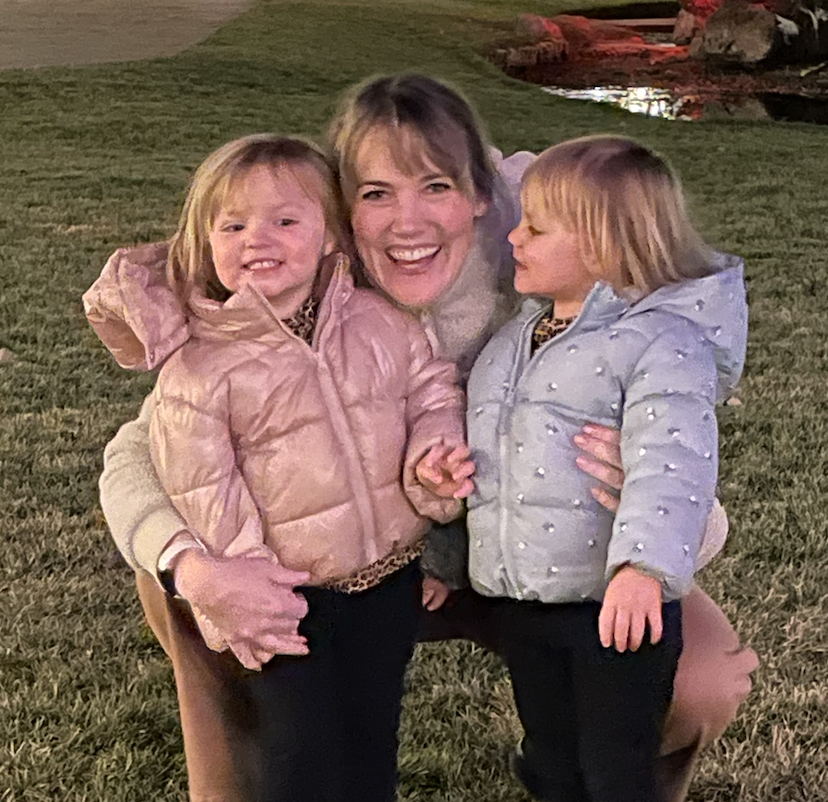
I was lucky enough to attend Montessori school through the age of ten, and it gave me a lifelong love of learning. I'm passionate about technology playing a positive role in our lives and in our growth as a society. When I'm not at a computer, I'm outside playing or hiking with my kids or asking Claude what to make for dinner. I'm based in Sun Valley, Idaho, and a 2 hr direct flight from the Bay Area, LA, and Seattle.